Showing posts with label Seoul. Show all posts

Monday, March 16, 2015

Korea Trip Day 17 - Making Of Kimchi [ 한국여행 열일곱째날 - 김장 ]

Entering into day 17 of my vacation and also marking the day on the calendar that I have to go back to reality soon.
However, something that I did not expect to experience happened on the last few days of my vacation. Yong and Irene told me that that their mother ( in-law ) is going to  be busy during Sunday as it is Kimjang [ 김장 ] day for them.

Kimjang [ 김장 ] refer to the traditional process of preparation and preservation of kimchi during winter.
Kimchi [ 김치 ] is a kind of traditional fermented side dish made of vegetables with different kinds of seasonings and is often being described as spicy and sour. There are many different varieties of Kimchi [ 김치 ] made from napa cabbage ( kind of Chinese cabbage ), radish, cucumber as the main ingredient.
Kimchi [ 김치 ] is made fresh from seasonal vegetables during summer, but during winter, people need to prepare large amount of Kimchi [ 김치 ] so as to provide nutrition throughout winter.
Kimjang [ 김장 ] can lasted for 2 to 3 days with the help from many people. The amount of cabbages prepared will depend on the number of people in the household.

Kimjang [ 김장 ] can be a tough and tiring process thus lots of people prefer to get ready-make Kimchi [ 김치 ] from the market rather than spending the time to make their own Kimchi [ 김치 ]. However, due to the fact the Yong's mum is a lady with traditional thinking so I can get to experience and view the process too. And Yong's mum is so nice to change the day of Kimjang [ 김장 ] to Saturday as I will be meeting up with my friend on Sunday.

Look at the amount of napa cabbage needed for Kimjang [ 김장 ]

Nowadays, things can get more simple as you can get salted napa cabbage from the market and you can save the time and shorten the process of kimchi making. The soaking and seasoning of the cabbage can take hours and allowing the cabbage to sit in order to ensure that the salt is absorbed evenly can take another few hours. Usually, people will choose to go through this process the day before and the actual kimchi making will take place the next day. 
With salted cabbage ( cabbage that have already go through the process of soa, season and sitting in ) selling on the market, people get to save a lot of time and trouble. 

Other vegetables needed 

The process of  Kimjang [ 김장 ] is really not easy as I thought. From the shows that I had watched on TV, they did not show much on the process, so I did not expected the amount of effort and work required. Yong's mum woke up really early ( guess about 4-5am ), so as to prepare the stock used. 
The stock is made with a kind of shrimp sauce [ 새우젓 ] and kim [ 김 ] ( seaweed ) and boiled for some time ( think it can even take hours since Yong's mummy gonna wake up that early ).  

Shrimp sauce [ 새우젓 ] and Kim [ 김 ] 

A friend of Yong's mum came at about 9-10am and I heard from Yong's mum that her friend is really good in cooking especially cooking of Korean food. Her friend will be the main 'chef' for the Kimjang [ 김장 ] process while the rest of the people are the helpers. Her friend sat down and started the really long process of cutting the vegetables.

Look at the skill of her cutting


Thin and even strips of radish 

After about 1 - 2 hours of cutting, all the vegetables are finally evenly cut and all ready for the next step. 


Red chili flakes [ 고추가루 ] being added to the radish. The amount of chili flakes added depends on the degree of spiciness that you want. If you are the kind that can't really take food that is too spicy, you can reduce the amount of chili flakes. 

Ensuring the chili flakes [ 고추가루 ] is well-mixed with the radish


Stock is added to the mixture

Shrimp sauce [ 새우젓 ] being added


Kim [ 김 ] being added

Porridge-like substance added


I was told that this so called porridge-like substance is made from rice and they served the purpose of making the mixture to be 'sticky' so that they will 'stick' to the napa cabbage later on. 

Spring onion added to the chili paste mixture

Fish sauce being added

Chili paste all ready to be 'apply' to the napa cabbage

After going through some many rounds of adding ( of ingredients ) and mixing, the chili paste is finally ready to be 'apply' on the napa cabbage. 
The napa cabbage are usually cut into half so that it is easier to apply the chili paste on it. 

Applying the chili paste onto the cabbage

I thought that you just have to apply the chili paste onto the cabbage and that's all but I'm wrong. There is a certain way to apply the chili paste. You have to 'separate' a few leaves of the cabbage ( without tearing them out ) and these few leaves are used to wrap around the cabbage and it was said that to keep and seal the taste in the cabbage. 

Kimchi are all ready

Oysters 

Some families will add oysters to the mixture of chili paste but in this case, Yong's mum taught me to eat the oyster with the kimchi that is just freshly made. The crunchy taste, the spiciness and the sweetness of the kimchi totally blend with the oyster and the oyster add sweetness to the kimchi. I'm the kind of people who don't like to eat raw food but I can totally accept this particular way of eating the oyster and not finding and raw feeling from the oyster at all.  

The kimchi are then kept and placed in a container with good seal. Usually they will not filled the kimchi right to the brim as the kimchi will produce liquid while fermenting and it might overflow.  
The kimchi will be leave out in room temperature for a day or two for proper fermentation. And they will be kept in the refrigerator after that. 
Korean family usually have 2 refrigerator in their homes, one for normal food stuff while one is just purely for storing of kimchi.


Lunch for the day

We had our lunch with the fresh kimchi and soup cooked by Yong's mum. Although the lunch was simple, but it's really tasty....Missing the food right now...Really love the soup...

Extra Information about Kimjang [ 김장 ] :
The practice of Kimjang [ 김장 ] reestablish Korean identity and strengthens family cooperation. Kimjang [ 김장 ] encourages sharing and exchanging and helps to strenghten family ties, as each famil has their own method of  Kimchi [ 김치 ] preparation and therefore, every family's unique method and flavors will be passed from generation to generation. Newly added family members will have to learn and must be willing to adapt and the customs of their new family. 
Thus, Kimjang [ 김장 ] serves as an remainder for many Koreans that the human communities need to live in harmony with the nature. 

Kimjang [ 김장 ] was added to the world's intangible heritage list by UNESCO. 
The listing allow Korea to not only preserve the yearly household tradition and the community spirit that goes with it but also allowing Korea to promote Kimchi [ 김치 ] globally. 

Although there are lesser families who are willing to spend the time to continue the tradition due to the fact that most people are getting busy with their lifestyle, however, there are still families who are willing to continue this traditional and they deserved to be praised and recognized for their effort in maintaining the traditional. 

Really enjoyed myself experiencing Kimjang [ 김장 ] and learning about things that I had never seen before. The whole experience was really wonderful and I really hope that I will have the chance to do it again..Till then, I will just keep the memory in my mind and recapping about the process when winter is approaching. =P

Hope that this article helps you in understanding more about the making of Kimchi [ 김치].

And I officially declared that my vacation has come to an end...but I'm sure that I will be visiting Korea again in the near future and exploring other cities and culture of Korea. Till then, gonna catch up with the articles on public holidays in Korea and the reviews of the accommodation that I had stayed in Korea. 

Sunday, March 15, 2015

Korea Trip Day 15 [ 한국여행 - 열다섯째날 ]

Had read a lot about places to visit in Gangwondo [ 강원도 ], such as places like Seoraksan National Park [ 설악산국립공원 ], Daegwallyeong Sheep Farm [ 대관령 양떼목장 ], Hwanseongul Cave [ 환선굴 ], Cheongpyeongsa Temple [ 청평사 ], Jeongdongjin Beach [ 정동진해변 ] and many more beautiful and interesting places.
However, all these places are located in different parts of  Gangwondo [ 강원도 ] and I really can't decided where to go, thus decided to change our plan after Alice showed me some photos on Suncheon [ 순천 ].

Suncheon [ 순천 ] is a now a quickly emertging as the ecological capital of Korea, and the city is often known as Eco-city and also Jeollanam-do coastal jewel. It is a city that you must visit especially if you are a nature lover. Suncheon [ 순천 ] further established its reputation as an eco-city after hosting the International Garden Exposition Suncheon Bay Korea in the year of 2013. 
There are quite a few well-known places in Suncheon [ 순천 ] recommended for tourist visit. Some of these places are Suncheon Open Film Set [ 순천 드라마 세트장 ], Naganeupseong Folk Village [ 낙안읍성 ], Seonamsa Temple [ 선암사 ], Suncheonman Bay Ecological Park [ 순천만 자연생태공원 ], etc. 

For those who are interested in visiting Suncheon [ 순천 ], these are the few ways that you can get to Suncheon [ 순천 ]  from Seoul. 

How to go to Suncheon [ 순천 ] from Seoul [ 서울 ] :
You can get to Suncheon [ 순천 ] easily by taking the different modes of transport.

KTX - Direct, Standard class costs about 43 000won ( ~SG$52.20 ) - Takes about 3hour 15mins,
ITX Samaeul - Direct, Standard class costs about 37 800won ( ~SG$45.80 ) - Takes about 4hours 10mins.
Mugunghwa - Direct, Standard class costs about 25 400won ( ~SG30.80 ) - Takes about 4hours 45mins

The train will start from Seoul [ 서울 ] - Yongsan Station [ 용산역 ], Line 1 [ 1호선 ] / Gyeongui–Jungang Line [ 경의·중앙선 ] and ends at Suncheon Station [ 순천역 ].

* Prices of the train might varies as if you are lucky, there might be promotion for the KTX tickets. Tickets can be purchase at the stations itself but you can also make online booking through http://www.letskorail.com/ebizbf/EbizBfIndex.do and collect the tickets at the station on the day that you travel.

By Bus 
Another option to travel to Suncheon Station [ 순천역 ] is taking the bus. The journey will take about 3hours 50min ( Excluding a 10-15min break during the journey )

Buses from Seoul Express Bus Terminal [ 서울(강남)고속버스터미널 ] :
3 different kinds of buses to choose from - General, Excellent and Night Bus. The differences between these buses are of course the ticket price and also the number of seats on the bus.

General - Can take up to 45 people and it costs about 19 300won ( ~SG$23.40 )
Excellent - Can take up to 28 people and it costs about 28 600won ( ~SG$34.70 )
Night Bus - Can take up to 28 people and it costs about 31 400won ( ~SG$38.10 )

You can go to the website https://www.hticket.co.kr/main.action to check on the schedule of the bus before your trip.
* But do note that the website is in Korean language.

To go to Seoul Express Bus Terminal [ 서울(강남)고속버스터미널 ] , you have to take the subway to Express Bus Terminal Station [ 고속터미널역 ], Line 3/7/9 [ 3/7/9 호선 ] and go to exit 1. After you come out from the exit, just follow the signs to get to the bus terminal. Do not panic if you entered a shopping mall as the bus terminal in located at one of the level of the shopping mall. 

* Note that the travel time by bus can vary depending on the traffic.
** Do note that the prices of the different tickets served only as a guideline as the prices are subject to change on different conditions.

By plane
There is no airport located in Suncheon [ 순천 ] and the nearest airport to Suncheon [ 순천 ] is at Yeosu [ 여수 ] is about 1 hour 30min away from Suncheon [ 순천 ].

* For my personal view, this might not be the best option to travel to Suncheon [ 순천 ] from Seoul [ 서울 ] as there is too much transfer in between and it can be a hassle if you have a luggage with you. 

Hope that this article helps you in planning your trip to Suncheon [ 순천 ] .

Tuesday, December 23, 2014

Korea Trip Day 8 [ 한국여행 - 여덟째날 ]

Went on a historical experience today. But before we officially go on the historical journey, we had to get our stomach filled. 

Random walked passed this Korean restaurant and decided to went in for our brunch. 


The entrance of the restaurant

We ordered a stir fried spicy octopus and chicken [ 쭈&닭철판볶음 ]. The food was served shortly after we had ordered our food. 

The side dishes [ 반찬 ] from the restaurant 

Five-grain [ 오곡밥 ] rice was served instead of white rice

Stir fried spicy octopus and chicken [ 쭈&닭철판볶음 ]

The Stir fried spicy octopus and chicken [ 쭈&닭철판볶음 ] was rather sweet at the first taste and it started to get spicy as you continued to eat. The octopus was chewy and not too hard as it was not overcooked and the chicken was rather sweet and spicy at the same time after absorbing the sauce into the meat, and yet the meat is at the same time. 
The boss of the shop was helpful and kept on coming over to our table to ensure that the food was not overcooked or burnt. He even added our rice into the sauce and told us to eat it that way so that the rice will be tastier. He add in sesame oil and seaweed to the rice and keep on saying: delicious.

Set off to  Namsangol Hanok Village [ 남산골한옥마을 ] after lunch. 

Namsangol Hanok Village [ 남산골한옥마을 ] which is also known as the village of traditional houses. The Korean traditional houses known as Hanok [ 한옥 ] have been restored to preserve the original atmosphere of that area. 
Namsangol Hanok Village [ 남산골한옥마을 ] consists of a collection of 5 Hanok [ 한옥 ] which were recovered from different parts of the city and relocated to Namsangol Hanok Village [ 남산골한옥마을 ]. Namsangol Hanok Village [ 남산골한옥마을 ] allows you to experience the Joseon dynasty citizenry and activities, from royalty to commoners. 


Main gate of Namsangol Hanok Village [ 남산골한옥마을 ] 

One of the Hanok [ 한옥 ]


A place where kimchi is stored 


Kitchen utensils


Pots for storing Kimchi

You can easily spend about 2 hours at Namsangol Hanok Village [ 남산골한옥마을 ] by visiting the different classes of Hanok [ 한옥 ]. There are also furniture being placed in the different rooms to let you have a better understanding of daily life during the Joseon dynasty. 

After touring the Namsangol Hanok Village [ 남산골한옥마을 ], you go also take part in the traditional Korean activities or games such as archery, Korean traditional dance and music and much more. During the weekends, Korean traditional marriage ceremony are shown at the Bak Yeong Hyo's residence and the ceremony is usually held at noon or 1pm. So do stay and watch the ceremony if you are visiting Namsangol Hanok Village [ 남산골한옥마을 ] during weekend. 

How to go to Namsangol Hanok Village [ 남산골한옥마을 ] :
Chungmuro Station ( 충무로 역 ), Line 3 or 4 [ 3/4호선 ] Exit 4 [ 4번 출구 ]

Other Information
Admission : Free
Closed on every Tuesday
Opening Hours : 
April - Oct : 9am - 9pm
Nov - Mar : 9am - 8pm

Final photo before setting off for Gyeongbokgung [ 경복궁 ]

Let's move on to the next stop : Gyeongbokgung [ 경복궁 ]

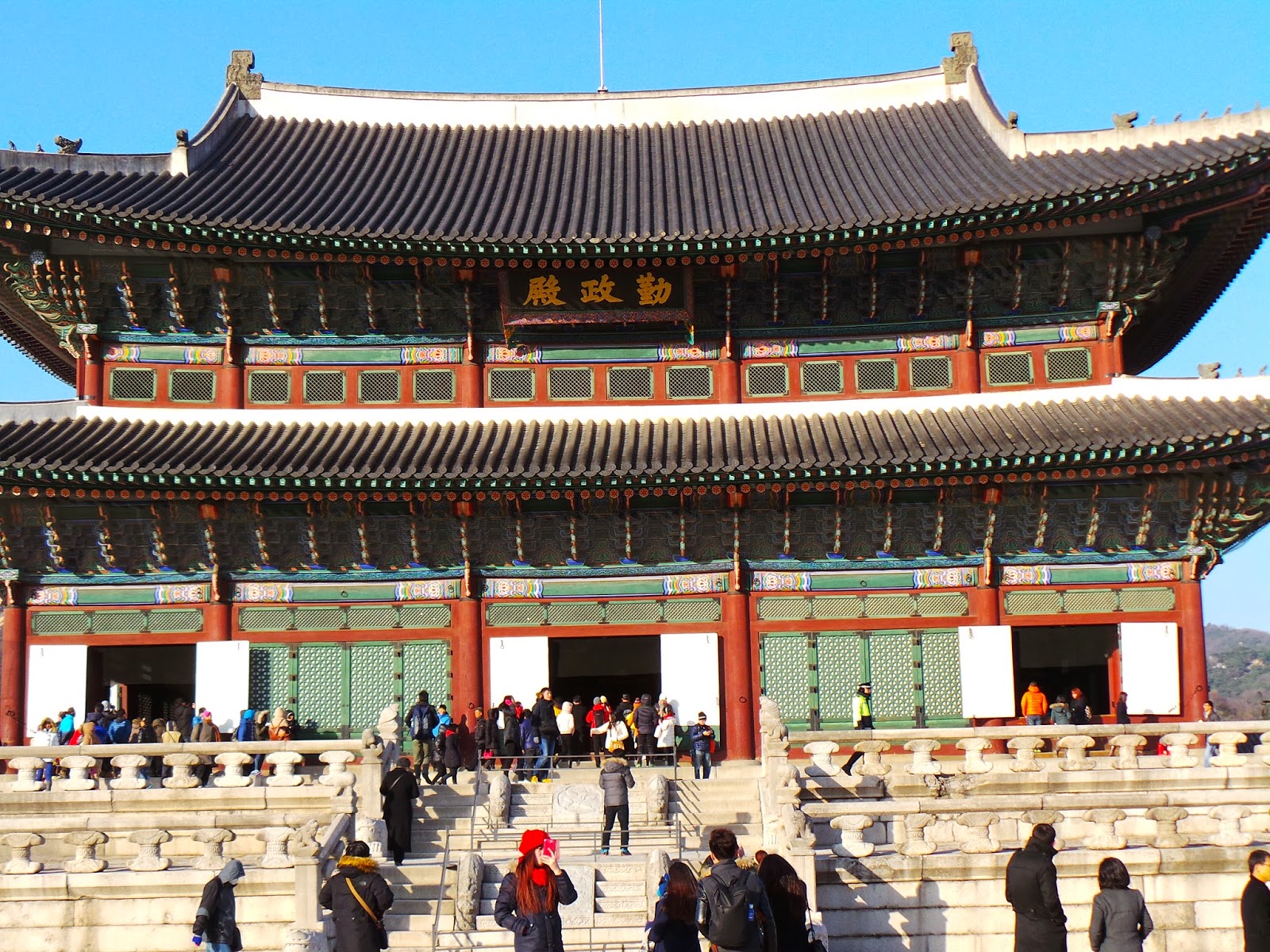
Gyeongbokgung [ 경복궁 ] is the main and the largest of the five grand palaces built by the Joseon Dynasty. It was built in 1395 ( 3 years after the Joseon Dynasty was found ) and served as the home for the kings of the Joseon Dynasty. 

The palace continued to serve as the main palace until Japanese invasions of Korea ( 1952 - 1598 ), when all of the palaces were damaged. The palace was abandoned for 2 centuries and was only restored and reconstructed under the leadership of Price Regent Heungseon [ 흥선대원군 ] during the reign of King Gojong [ 고종 광무제 ]. 
Gyeongbokgung [ 경복궁 ] flourished for several decades until the Japanese once again demolished the palaces during the Japanese occupation ( 1910 - 1945 ). 

Heungnyemun, The second inner gate of Gyeongbokgung [ 경복궁 ]

The Korean government has been putting in effort since 1990, trying to restore and rebuild the building that were destroyed during the Japanese occupation. Although only about 40% of the buildings have been restored, but there are still lot of beautiful things to see in the palace. 

Geunjeongjeon [ 근정전 ] ( Imperial Throne Hall )

Geunjeongjeon [ 근정전 ] interior

Gyeonghoeru [ 경회루 ] ( The Royal Banquet Hall )

Beside taking a tour and looking at the different buildings in the palace, the reenactment of the changing of the Royal Guard and the Patrol Ritual are performed daily from 10am to 3pm, in front of the second inner gate of Gyeongbokgung [ 경복궁 ] - Heungnyemun.


Do stay for the reenactment of the changing of the Royal Guard and the Patrol Ritual if you have a chance as the ceremony is quite grand and it last for about 10 minutes, giving you the chance to take lots of photos of the ceremony. 

How to go to Gyeongbokgung [ 경복궁 ] :
Gyeongbokgung Palace Station [ 경복궁 역 ], Line 3 [ 3호선 ], Exit 5 [ 5번 출구 ]
or
Gwanghwamun Station [ 광화문 역 ], Line 5 [ 5호선 ], Exit 2  [ 2번 출구 ]

Other Information
Admission : 3000won
Closed on every Tuesday
Opening Hours :
Nov - Feb : 9am - 5pm
Mar - May and Sept - Oct : 9am - 6pm
Jun - Aug : 9am - 6.30pm 
Last admission : 1hr before closing

This day allow me to understand the different classes of Joseon Dynasty, from the royalty to commoners. It also leave me in awe of how the Korean government is making an effort to preserve such historical sites so that the future generation can have a better understanding and also a chance to view the past. 
It also make me wonder about the history of the other dynasty such as the Silla dynasty, the Goryeo dynasty and much more. I hope that I have the chance to find out more about the histories of the other dynasty in the future. 

Tuesday, December 16, 2014

Korea Trip Day 7 [ 한국여행 - 일곱째날 ]

Did not do much sight seeing today as Nurfa gonna do her last minute shopping before she returns to Singapore. 
Went to Namdaemun Market [ 남대문시장 ] in the earlier part of the day. 

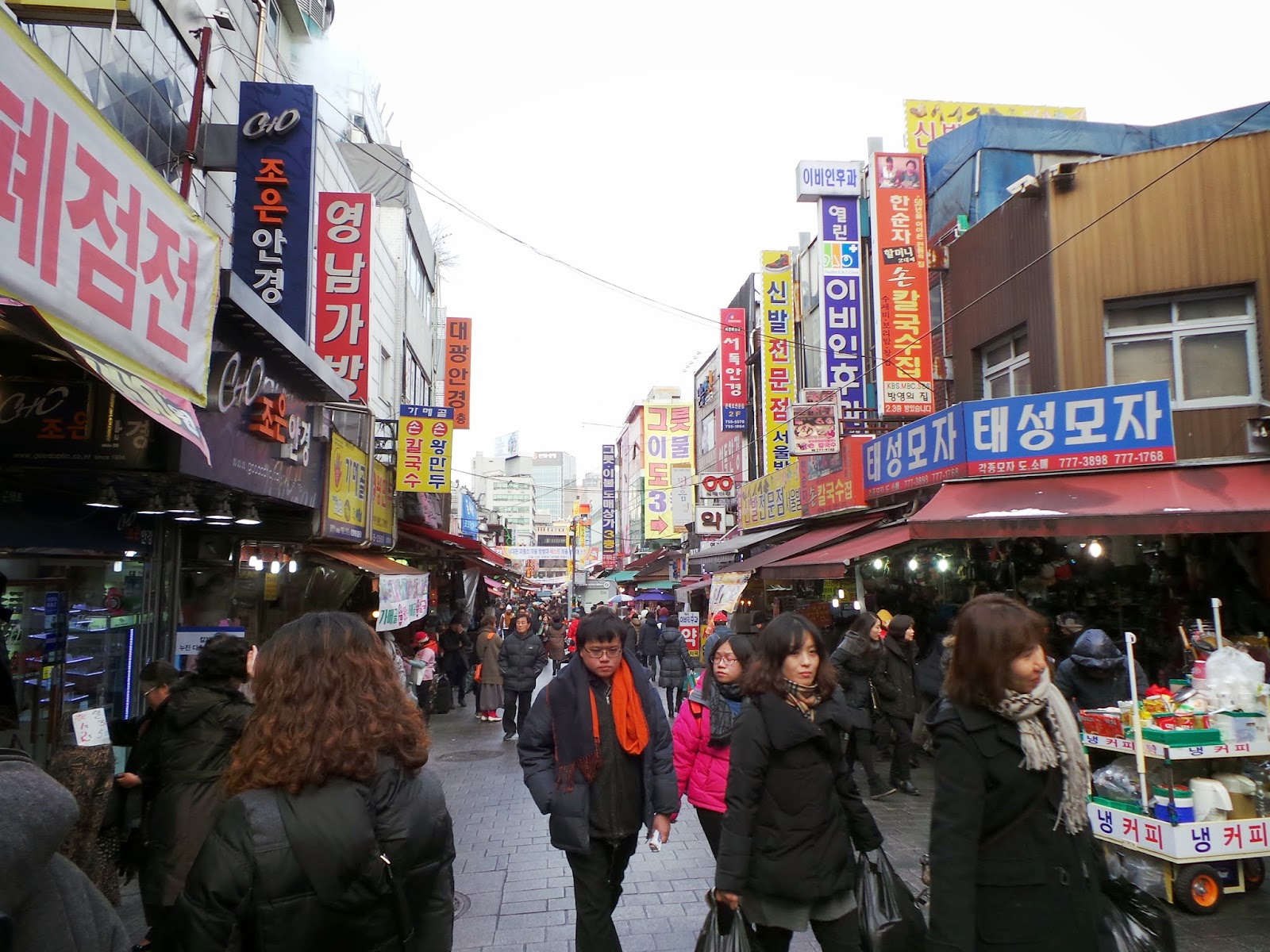
Namdaemun Market [ 남대문시장 ], opened in 1964, is the largest traditional market in Korea. There are various things such as clothes, bags, accessories, household ware, children's clothes and toys, etc selling in Namdaemun Market [ 남대문시장 ]. All products in Namdaemun Market [ 남대문시장 ] are sold at affordable prices and the stores also function as wholesale market at the same time. 


One of the entrance at Naedaemun Market [ 남대문시장 ]

While taking a walk in Namdaemun Market [ 남대문시장 ], there are lots of shops selling clothes and bags but personally I feel that all these clothes and bags are not suitable for the younger people but more for the middle-age people or older, but that means that your wallet can be at a rest while you are shopping in Namdaemun Market [ 남대문시장 ]. 

One of the alleys

Namdaemun Market [ 남대문시장 ] opens from 11am to 5pm and is closed every Sunday ( though some of the street vendors will still be open Sunday ). This market is crowded at all times so be prepared to get 'knocked' into during your tour at the market. 

There are also lots of street vendors in Namdaemun Market [ 남대문시장 ] selling street food such as Ddeokbokki [ 떡볶이 ], Odeng [ 오뎅 ], Fried Snacks [ 튀김 ], Hotteok [ 호떡 ], Egg bread [ 계란빵 ] and much more, so be prepared to get your wallet and stomach ready and tried out the different street food at affordable pricing. 

How to get to Namdaemun Market [ 남대문시장 ] :
Hoehyeon Station [ 회현역 ] , Line 4 [ 4호선 ], Exit 5 [ 5번 출구 ]


After touring at Namdaemun Market [ 남대문시장 ], decided to go to Myeongdong [ 명동 ] since it is just one stop away. 

Myeongdong [ 명동 ] is one of the busiest and main shopping street of Seoul and is one of the top tourist district. There are different kind of shops in Myeongdong [ 명동 ] from high end fashion to causal attire and as well as the different brands of cosmetic shops located in Myeongdong [ 명동 ].


Entrance of Myeongdong [ 명동 ]

Entering into Myeongdong [ 명동 ]

Myeongdong [ 명동 ] is full of beauty outlets and every Korean cosmetic brand has at least one outlet in Myeongdong [ 명동 ]. Most of the beauty products are selling at inexpensive pricing but of high quality. There are always sales going on at the different beauty outlets in order to attract more costumers. You do not have to worry of communication problem while shopping in these beauty outlets as there are staffs who are able to speak Korean/Chinese/English and even Japanese for the convenience of international tourists. 

Beside the different Beauty outlets, you can also get different brands of clothes such as Zara, Forever 21 or even casual clothing for the alleys of Myeongdong [ 명동 ]. These casual clothing might not be famous for the brands but they are fashionable and also affordable at the same time. 

Myeongdong [ 명동 ] is not only famous for the shopping experiences but also well-known for the choices of food. There are lots of different options for you if you intend to have your meal in Myeongdong [ 명동 ]. There are lots of Korean restaurants in Myeongdong [ 명동 ], but if you intend to go for other choices such as Japanese food, Western food, Chinese food or even fast food, you will not be disappointed as you will sure to find something that you like in Myeongdong [ 명동 ].

There are also lots of street vendor on the main street and alleys of Myeongdong [ 명동 ] and if you decide not to go for main course, you can also try out the different street food and you will get spoiled for the choices that they offered. 

Do drop by Myeongdong [ 명동 ] if you have the chance to experience one of busiest street of Seoul. 

How to get to Myeongdong [ 명동 ] :
Myeongdong Station [ 명동역 ] , Line 4 [ 4호선 ], Exit 5/6/7/8 [ 5/6/7/8번 출구 ]


Went off to Wangsimni Station [ 왕십리역 ] to meet I-jin for dinner. She brought us to one of the fried chicken shop in the area and she told us that fried chicken is really famous in Korea and popular for all people. 


Personally I felt that Korean style fried chicken is more crispy as compared to the normal fried chicken but it is nothing special as fried chicken can be commonly found in different countries ( Sorry but that's how I feel personally ). 
It is also a must to order a mug of beer to go with fried chicken while you are eating. 


Recommend you to go for a try of Korean fried chicken if you wanna live like a Korean.

Went off to the E-mart located at Wangsimni Station [ 왕십리역 ] after dinner. E-mart is a discounted supermarket operated by Shinsegae. The E-mart is really big and you can find everything that you need in the E-mart, from household item, clothes, cosmetic, food and snacks and much more. 
Do consider dropping by this E-mart if you need to do some grocery shopping. 

How to get to E-mart :
Wangsimni Station [ 왕십리역 ], Line 2 or 5 [ 2 / 5호선 ], Exit 5 [ 5번 출구 ]

Final photo before saying bye

Stay tune for my next update.